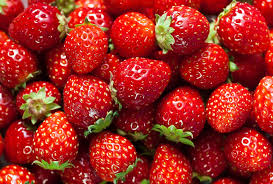
Strawberries are fruits containing substantial
levels of antioxidants which our bodies for protection against diseases and
inflammation. They also contain good levels of folate, potassium and Vitamin C
as well as being a good source of fiber.
Not many farmers in Uganda are engaged in growing the fruit
but of late many are adopting growing it in their backyard.
One such a farmer is Joyce Obitiru who is growing it on a
fairly small scale on her home backyard located in Mbuya, a Kampala suburb
She says the fruit has a number of health benefits, the
reason she is growing it for home consumption.
According to her, little did she know about the best agronomy
practices of growing strawberries but after reading the planting guide from
Crop guide Hiafa Publications, she was good to go and below are the excerpts
Choosing and preparing the planting site
The plant is tolerant to different soil types but preferable,
loom soil is the best with soil pH between 5.5 and 7.
If
soils in your area are naturally alkaline, it is best to grow strawberries in
half-barrels or other large containers filled with compost enriched
potting soil.
The plants require 6-10 hours a day of direct
sunlight, so choose your planting site accordingly.
The planting site must be well-drained
and raised beds are a particularly good option for planting.
Recommended
varieties
It is advisable for farmers to plant more than one
variety. Each will respond differently to conditions and you will have a range
of different fruits to enjoy.
The most common
varieties are Northeaster which considered best
suited for a range of land types and the fruit has strong flavor
and aroma.
Others are sable, primetime’ with a mild-flavore, disease-resistant
variety, best adapted to the Mid-Atlantic, cardinal, Camarosa
and Tristar’ is a
day-neutral variety that’s very well-suited for hanging baskets
How
to plant strawberries
It is important to practice spaced row
system because it limits the number of plants that grow from a mother plant.
The mother plants are set 46 cm by 76 cm apart in rows and all
other runners are pulled or cut from the mother plants. Even though more care
is needed under this system, advantages include higher yields, larger berries
and fewer diseases.
Water plants well at the time
of planting and keep the beds mulched to reduce water needs and weed
invasion.
In the first year, pick off blossoms to
discourage strawberry plants from fruiting. If not allowed to bear fruit, they
will spend their food reserves on developing healthy roots. The yields will be
much greater in the second year.
Eliminate daughter plants as needed.
First and second generations produce higher yields. Try to keep daughter plants
spaced about 10 inches apart
Plasticulture
Most commercial farmers use the
plasticulture system where raised beds are formed each year, fumigated and are
covered with large plastic sheets under which the irrigation tubing is
installed.
The main advantage is that it has a
considerable increase in soil temperature of the active root zone of the
plants. This enhances plant physiology and enables much earlier flowering and
fruit bearing.
It prevents against weed growth, thereby
saving on herbicides use and protection of the beds from erosion by strong
rainfall.
At the end of the harvest season, the
plastic is removed and the plants are plowed into the ground.
However, because this method requires a longer growing season to allow for establishment of the plants each year, and because of the increased costs in terms of forming and covering the mounds and purchasing plants each year, it is not always practical in all areas.
Weeding
The farmer must be diligent about weeding
which must be done by hand, especially in the first months after planting.
If the farmer can afford, fertilize with all-purpose
granules for strong growth. In warm weather, berries ripen about 30
days after blossoms are fertilized.
In these cases the plants are not
destroyed after harvest, but are kept from year to year, growing in rows or on
raised beds. This system is most common in colder climates and where growers
have less capital. It carries lower investment costs, and lower overall
maintenance requirements. Yields are typically lower than in annual
plasticulture.
Irrigation
On the one hand, strawberries are
sensitive to periods of severe drought; dry soil can literally kill them
or stop fruit production.
On the other hand, they are sensitive to
waterlogging that causes the roots to suffer oxygen deficiency and is an
optimal condition for soil-borne microbial and fungal- diseases.
Continuous optimal water status helps to
get the highest yields of large berries. Strawberries should have a minimum of
25 mm of water per week and up to 50 mm of water should be given weekly while
the fruit is forming from early bloom until the end of harvest.
Pollination
The plant is mostly self-pollinated and
under field conditions self-pollination is satisfactorily supplemented with
natural agents like wind, honeybees and other insects.
Pollination of all the pistils of a
flower is necessary for maximum berry size. If few are fertilized, an
irregularly shaped berry or “nubbin” of only one fifth the size of
well-fertilized berries will develop.
If a grower has a very large acreage of
berries, few active beekeepers in the area and little or no natural
shelter-belt areas, then it may be very good insurance to have honeybees
brought into strawberry fields as the first flower opens.
Harvesting
Generally, berries ripen within 28 to 30
days under optimum conditions after first bloom.
The time between first bloom and full
bloom can be 11 to 12 days. A great increase in the number of ripe fruit occurs
over the first 4 to 6 days of harvest.
Berries are harvested every other day
under normal temperatures for about 6 to 7 pickings. Avoid picking the fruit
when plants are wet. Keep harvested berries out of the sun and place them under
refrigeration as soon as possible. Pick berries when they are fully colored for
optimal size and flavor. Berries do not improve in quality after picking.
For hand harvest, it is wise to employ
enough pickers to harvest the berries by noon, during the cool part of the day
when pickers are most efficient. Harvested berries should be delivered and sold
within 24 hours of harvest to reduce spoilage.
The farm can be kept for more than five
years depending on how the farmer takes care of it the fruiting and harvesting
will continue.
Challenges
Strawberries
are highly perishable. It is best to consume them within a few days of picking
them. They are also susceptible to mold and mildew. Never store them crammed
together, or they will get easily bruised and be more vulnerable to mold.
Unlike some
fruit, they will not continue to ripen once harvested. They will only begin to
rot. So, be sure to pick only those that are rich red in color, not with
greenish or yellow places on them.
If you wish
to freeze them, gently wash the strawberries, then pat dry. Some schools of
thought recommend leaving the green stem leaves on them. They will retain higher
levels of Vitamin C if frozen whole.