Agricultural
experts at the Ministry of agriculture in conjunction with development partners
have warned against misuse of pesticides in vegetables particularly tomatoes by
famers and traders since the residues cause danger in human health.
The Ministry
of Agriculture, Animal Industry and Fisheries (MAAIF), in partnership with the Centre
for Agriculture and Bioscience International (CABI) and Kampala Capital City
Authority KCCA, is fighting unsafe pesticide use in tomatoes and fresh produce
through public awareness campaigns, behavior change initiatives and stronger
regulatory enforcement.
This
was revealed during the launch of a second phase of nationwide public awareness
campaign titled "Wash
Well, Eat Well, stay Healthy" aimed at promoting food safety
and responsible pesticide use.
This
is after running a twelve week first campaign on Radio Buddu in Masaka and
Radio Simba tilted “spray smart, eat safe” to educate farmers, agro input
dealers, market vendors and consumers on pesticide risks.
The campaign procedure
Ms
Christine Alokit. PlantwisePlus
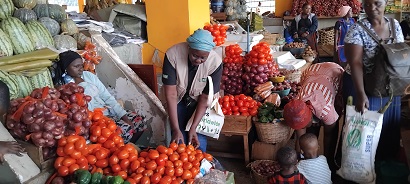
Country Coordinator at CABI explained that her team of experts held talk shows
on the two radio stations targeting sensitization initiative on pesticide miss
by tomato traders in major markets across the region.
“The talk shows targeted questions such as what do
traders use to preserve tomatoes. How do consumers make sure they tomatoes they
are purchasing are safe from pesticide residues and how do farmers apply the
pesticides in their farms,” she notes.
There were a number of respondents where 50% said
they wanted glossy tomatoes and 20% said they want tomatoes free of pesticides.
The farmers said they want their tomatoes to reach
the market when still fresh and 20% said the support the idea of their tomatoes
that are not sprayed by pesticides but most of them said they spray their
tomatoes to achieve high yield.
In general 67% of the listeners said pesticide
consumption is dangerous to human organs and majority do not observe the
harvesting interval.
“When the experts where presenting the
sensitization program on radio, they emphasized the dangers of consuming pesticide
residues in Tomatoes and other vegetables. It causes infertility, cancer and
skin diseases. It is the reason farmers, traders and agro input dealers are
urged against its misuse,” Alokit notes.
Ms Alokit and her team of experts from MAIFF,
National Agricultural Research Organisation (Naro), KCCA and the government
analytical laboratory have started the second phase of the campaign where they
are conducting Market sensitization in 10 Markets in Kampala and 6 in Masaka
The Kampala markets include Wandegeya, Kalerwe,
Bugolobi, Natete, Busega, Usafi, Nakawa, Kasubi, Ntinda and Owino and radio
talk shows on Radio Simba and Budu in Masak running for three weeks.
The second package is to train farmers in selected eleven districts mainly in Central Uganda where the challenge of misuse of pesticide is acute. This compaign has already started with the team taking on traders at Busega Market last week.
Overview of pesticide miss use and
solutions
The
Assistant Commissioner for Agro-Chemicals at MAAIF, John Mwanja, giving the
overview on improper pesticide application said it remains a significant threat
to consumer health and the safety of Uganda's food supply.
“Farmers
use pesticides on vegetables including tomatoes to control pests and diseases
but improper use can cause damage to human health and it can contaminate the
environment and harm beneficial organisms,” he notes.
He
explained that farmers across the country are applying a chemical called
Mancozeb on tomatoes after harvest yet it is supposed to be applied on tomatoes
that are still growing in the field.
Consumption
of such tomatoes leads to cancer, reproductive organ failure and thyroid gland
diseases in humans.
It is
the reason the Ministry of agriculture has a law and regulation on pesticide
use because pesticides are toxic in nature.
Farmers
are tasked to use it safely by observing the instructions in the label and
observing the Pre harvest interval as well as pesticide interval application.
He urged farmers to stop applying Mancozeb on harvested tomatoes.
Stake holders take
Dr.
Robinson Kabanda, the in charge of animal production at KCCA explained that it
is important for farmers and traders of vegetables to observe proper
handling of the produce and this calls for markets to ensure there is water facility,
proper sanitation, proper storage facility to ensure product quality.
“Food
premises and market infrastructure must fit medical standards and these include
storage with proper temperature control. This calls for provision of cold rooms
and refrigerators in markets for traders,”
Dr
Heny Kaula the manager health and sanitation inspection KCCA giving the
statistics noted that the recent World Health Organization report indicates an
estimated out of 866 million
people nearly 1 in 9 to 1 in 10 people worldwide fall ill each year from
eating contaminated food.
The
death rate is that 1.5 billion people die globally from eating contaminated
food and 310 billion US dollars lost in terms of productivity annually.
Mr
David Mutende, a senior chemist at the Government analytical Laboratory noted
they are part of the campaign because every year his team moves across the
country testing farm produce quality to establish the pesticide use levels.
To
him washing the produce may not be a solution because some of the pesticides
can last longer in the vegetables. He recommends farmers, traders and agro
input dealers to stop miss use of pesticides and pesticide residue
contamination in vegetables.
Key Strategies and Actions
The team recommends Social and behavioral change
where actors must move away from blanket spraying toward better purchasing, application,
handling and monitoring of agricultural chemicals.
Urged
farmers to strictly obey recommended waiting periods between spraying and
harvesting so chemical residues can degrade.
Apply Integrated Pest Management & Extension
Support by utilizing the CABI-backed Plantwise Knowledge Bank and training
agricultural extension workers and plant doctors to help farmers scout for
pests and adopt safer or biological alternatives.
Legal Enforcement through warning that farmers,
traders and manufacturers who violate pesticide regulations or handle banned
and counterfeit agro-chemicals face legal action and market rejection.