The
International Livestock Research Institute (ILRI), with support from the Bezos
Earth Fund and the Global Methane Hub, has announced the launch of a three-year,
US$3.35 million initiative, part of the Global Methane Genetics Initiative,
The
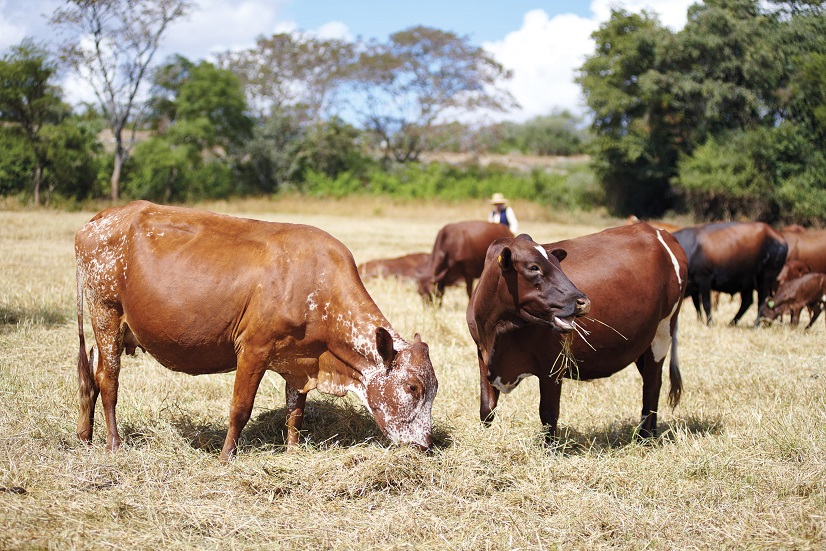
project will use cutting-edge science to help African countries breed cattle
that produce less methane emissions.
By
improving indigenous livestock, the initiative aims to reduce emissions while
strengthening productivity, food security and climate resilience for millions
of smallholder farmers across the continent
“Reducing
methane from cattle is one of the most elegant solutions we have to slow
climate change,” said Andy Jarvis, Director of the Future of Food at the Bezos
Earth Fund.
He
added that by thanking the collaboration with the Global Methane Hub, and said
his team will back an effort that uses age-old selection practices to identify
and promote naturally low-emitting cattle locking in climate benefits for
generations to come.
Livestock
in Africa account for 18% of global livestock methane emissions, with cattle
alone responsible for 70% of emissions in Sub-Saharan Africa.
Without
intervention, these emissions could triple by 2050. By tapping into the genetic
diversity of indigenous breeds and applying cutting-edge science, the
initiative will help Africa contribute to global climate goals, including the
1.5°C warming target.
‘This
initiative represents an important step towards a more sustainable and
productive livestock sector in Africa,’ said Raphael Mrode, Principal Investigator
at ILRI, who will oversee scientific management of the project.
He
noted that by integrating advanced genetics with Africa’s indigenous breeds and
farmer knowledge, the team can achieve meaningful reductions in methane
emissions while strengthening rural livelihoods through improved productivity.
The
initiative will address the following
Measuring
methane from 3,000 cows and production traits in five African countries using
advanced laser detectors, and mobile apps, linked to existing data on 9,000
cows.
Profiling
microbial communities in over 1,000 tropical cows, using rumen content to
understand links between microbes, productivity, and methane emissions.
Scientists
are using advanced genetic tools to breed cows that can better withstand heat,
require fewer resources, and produce less greenhouse gas.
These
climate-smart cattle are being introduced into national breeding programs
across Kenya, Ethiopia, South Africa, Burkina Faso, and Benin—helping farmers
adapt to climate change while reducing emissions
Build
local capacity by recruiting and training technicians, strengthening national
breeding centers, and publishing bull and cow rankings accessible to
farmers.
Regional Collaboration
ILRI
will coordinate the Africa-wide effort from Nairobi, Kenya and Addis Ababa,
Ethiopia, working with leading partners including the Agricultural Research
Council (South Africa), French Agricultural Research Centre for International
Development (CIRAD) and The International Centre for Research and Development
of Livestock in the subhumid zone, (CIRDES Burkina Faso), and Université
d'Abomey-Calavi (Benin). Partnerships with organizations such as URUS and GENUS
will ensure dissemination through breeding centers and farmer networks.
“This
work brings together the best of science, industry, and the global breeding
community to accelerate genetic improvement for methane efficiency worldwide,”
said Roel Veerkamp, Professor and leader of the initiative at Wageningen
University & Research (WUR). “It fits nicely with our mission at WUR to
explore the potential of nature to improve the quality of life.”
Expected
Impact
The
team expects 12% cut in livestock methane over 20 years by an annual 0.6%
direct methane reduction at the population level using bulls and cows improved
for low methane emission
Improvement
in productivity is expected to reduce methane production per kg milk by about
20-25% over a 5-year period
Publicly
available genomic data to support widespread, low-cost breeding
improvements.
Increased
access to productive, climate-resilient livestock for smallholders,
particularly women and youth.
This
initiative marks a major step in aligning livestock research with climate
action, offering a pathway to permanent and cost-effective methane mitigation
while securing the future of African farming communities.