In most
developing countries including Uganda the use of modern synthetic pesticides is
limited and sometimes non-existent.
This is so
not only because they are expensive but also because of the small fields
cultivated by subsistence farmers making the use of such pesticides uneconomical.
Yet, most
of these countries lie in tropical and subtropical areas where pests and
diseases are abundant throughout the year.
The battle
against pests is a difficult one even with the advanced technology that exists
today.
The
implication to this is that in these areas, pests and diseases pose a major
problem in agricultural production.
According
to a 2004 publication by Food and Agriculture Organisation, pests contribute
30-40% of crop loss worldwide while the loss in the tropics is reported to be
even higher than 40%.
However
experts are advising farmers to battle the challenge of insects in particular
using certain repellent plants to reduce the insect infestation in their farms
In the
publication scientists outline insect repellent plants which can work in farmer
fields in Uganda and in other developing countries faced with the same
challenge
Farmers in
Uganda can effectively deter insects and bugs by strategically planting
and utilizing certain repellent plants around their farms and crops.
These
plants, often with strong odors or containing insecticidal properties, can act
as natural barriers or pest control agents.
Specific plants and
their uses
Marigold
Planting marigolds also known with its
scientific name Tagetes spp. around crops can help repel nematodes and other
soil-borne pests. Their strong scent also deters various insects.
Chill pepper
Chili peppers (Capsicum spp.) contain
capsaicin, a compound that can repel many insects. Farmers can make
chili-based sprays or use crushed chili pods with ash to deter storage pests. This
works well at storage level.
Mexican
marigold
Known for its strong, pungent odor, Mexican
marigold is effective in repelling various pests at field level, including
those that attack stored grains.
Tithonia
and Leucaena
Both Tithonia and Leucaena can be classified as
shrubs, though their growth habits can vary.
Tithonia diversifolia, also known as Mexican
sunflower, is typically described as a shrubby, herbaceous plant that can grow
from 2 to 3 meters tall. Leucaena leucocephala, on the other hand, is a
shrub or small tree, sometimes reaching heights of 18 meters if not managed
These plants can be planted in and around
fields to deter pests and also provide additional benefits like soil improvement.
Pyrethrum
Pyrethrum, derived from chrysanthemum flowers,
contains natural insecticides. It can be used to make sprays or mixed with
stored grains to deter pests.
Lantana
camara
The dried and crushed leaves of this plant can
be mixed with stored grains to repel pests.
Onions
and garlic
These can be planted near crops to deter
insects due to their strong odors.
Coriander
Coriander can be used in a
similar way to onions and garlic, as a natural insect repellent.
Desmodium
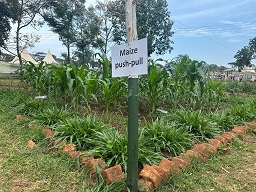
Desmodium helps in
pest control through a push-pull strategy, where it repels certain pests
while attracting beneficial insects that prey on them.
It also disrupts the
life cycle of parasitic weeds like Striga. Specifically, Desmodium emits volatile chemicals that deter
stemborer moths from laying eggs on nearby crops.
It also attracts
parasitoid wasps that attack stemborer larvae.
Additionally,
Desmodium's roots release chemicals that can either stimulate the germination
of Striga seeds or inhibit their growth, leading to suicidal germination and
reducing the weed's presence in the soil.
Methods of
application
Intercropping
Planting pest-repellent plants alongside crops
can create a natural barrier.
Repellent sprays
Farmers can create organic pesticides by
boiling leaves of certain plants like Mexican marigold or chives and using the
resulting liquid as a spray.
Mixtures for storage:
Dried and crushed repellent
plants can be mixed with stored grains and ash to deter storage pests.
Additional tips for effective pest management:
Cultural practices
Clearing fields of weeds and infected plant
parts, proper soil management, and crop rotation are important aspects of pest
control.
Resistant varieties
Farmers can also choose crop varieties that
are naturally resistant to certain pests.
Integrated pest management
A holistic approach that
combines different control methods (including the use of repellent plants) to
minimize pest damage
Types of Insects
There are various types of
insects that infest farmer fields across the country causing destruction to
various crops mainly vegetables, legumes and cereals and they are explained as
below.
Field Crickets
Their host plants include
tomatoes, eggplants, green pepper, water melon and cereals such as rice among
others.
It feeds on plants at the root
level and cuts the plants off from its growing roots
Variegated grasshopper
The host plants include cassava,
citrus, cotton, maize, cocoa, coffee, sweet potato and yams among others and it
mainly feeds on leaves.
Thrips
Thrips are known to
feed on a wide range of host plants, including various vegetables, fruits,
ornamentals, and field crops.
Thrips parvispinus
has a host range of plant species which include eggplant, pepper, potato, and
green bean for vegetables; avocado for fruit; and azalea, begonia,
and cyclamen for ornamentals.
They also commonly
infest crops like maize, onion, cotton and various legumes.
Aphids
Aphids are known to
infest a wide variety of plants, including both cultivated crops and wild
plants. Common host plants include various vegetables, fruits,
ornamentals, and greenhouse plants.
Specific examples
include legumes
such as Pea, bean, lentil, chickpea, alfalfa, lupin, soybean,
plus a number of cereals and wild plants and the suck sap from plants.
Spider mites and rust mites
Spider mites are
known to infest a wide range of plants, including fruit trees, vegetables,
berries, vines, houseplants, and ornamentals. Some specific examples of
host plants include beans, cassava, cotton, citrus, okra, tomato, papaya,
potato, tobacco, strawberry, and various cucurbits and legumes
Rust mites mainly
infest vegetables causing rust on its leaves
Ladybird beetles and Blister
beetles
Lady bird beetles are known to feed on
crops such as wheat, apple, mustard and watermelon
among others while blister beetles feed mainly on vegetables and flowers
Leaf minors
These insects are
known to be feeding on vegetables and legumes such as cabbage, other brassicas,
okra, onion, pigeon pea, bell pepper, cucumber, pumpkin, cowpea, potato,
passion fruit, tomato and common bean
The maggots suck sap
from plant leaves causing severe damage leading to limited growth to maturity.
Ball worms
Bollworms,
primarily known as helicoverpa armigera Helicoverpa armigera and pink
bollworm, have a wide range of host plants.
Armigera is known to
feed on over 180 plant species, including important crops like cotton,
maize, soybean, pepper, and hibiscus species and okra
The feed on young
plants and fruits and mature level.
Fall Armyworms
Fall Army
worm feeds on a wide variety of plants. It is known to attack over 350
plant species, causing significant damage to important crops.
Some of its
most common host plants include maize, sorghum, rice, sugarcane and
wheat.
It also
attacks other crops like cotton, soybean and various vegetables.
In Africa,
it has been confirmed to feed on maize, sorghum, sugarcane, rice, millet, wild
sorghum, cotton, napier grass, capsicum and rhodes grass.
Nematodes and Root knot
Root-knot nematodes
have a very wide host range, affecting a vast array of plants including many
common vegetables, fruits and ornamentals.
Examples
include tomato, papaya, banana, sweet potato, taro, carrots, beans, peas,
and many others. Even some crops in the grass family like rice, maize, and
sugarcane can be hosts
They also feed on
ornamental crops, as well as trees, grasses and even some weeds.