As the world Aquaculture conference held in Uganda drawing over 2000 local and global delegates kicked off in Kampala last week, a team of international delegates and local science journalists embarked of field tour to Jinja on fact finding of the first ever Tilapia fish factory in the country.
The factory construction work nearing completion
with production work to kick off early next month is good news to aquaculture
farmers in the country and East Africa.
Farmers across the country practicing aquaculture
fish farming are faced with the challenge of quality fish feed as well and high
price challenge because most of the feed are imported from other parts of the
world.
For farmers to achieve quality fish growth in their
ponds, there is need to provide quality feed to the fish at all times. This was the concern of most experts and
stakeholders who attended the conference.
What is aquaculture and its background in Uganda?
Aquaculture
is the farming of aquatic organisms, including fish in controlled aquatic
environments. It's essentially farming in water and the controlled
environment which can be a pond, river, lake and ocean referred to cage fish
farming or even closed systems on land
The Aquaculture Conference held in Uganda was hosted
by the Ministry of Agriculture Animal Industry and Fisheries (MAAIF) department
of fisheries under the leadership of State Minister for fisheries Hellen Adoa.
The conference held under the theme Aquaculture on
the Rise” draw participants from fifty eight countries across the globe.
It was convened by the World Aquaculture Society
and partners across the globe with the German Corporation for International Cooperation (GIZ) as key
funders and other development partners promoting aquaculture farming across the
country including Uganda such as True Fish and European Union among others.
The World Aquaculture Society (WAS) was founded in 1969 as the World
Mariculture Society.
Its membership has since expanded to over 3,000 across more than 100
countries.
In order to meet the expanding needs of this international diversity,
the WAS has created the Chapters that represent each continent such as the United States, Japan, Korea, Latin American
and Caribbean region including Asian-Pacific region.
The overall objective of WAS as a network, is to bring together all the
aquaculture value-chain stakeholders world-wide to share information and
experiences and practice excellence through science, technology, education and
information exchange.
The Director of Buginyanya Zonal Agricultural Research and Development
Institute (BugiZaRDI) Dr. Nasser Kasozi explained
that aquaculture in Uganda has been practiced for 84 years now.
It was started in 1941 by the colonial British administration and in 1950 the team established the National Fisheries Resource Research Institute (NaFIRRI)Aquaculture Research and development center Kanjansi.
It was mainly for farming catfish and Tilapia and in 2010, research work began with the hatchery unit and feed mill.
The aquaculture fish farming has grown with Uganda now producing 130,000 metric tons annually.
Most farmers practicing aquaculture and tilapia farming need access to improved seed
They access fish seed which includes eggs and fingerlings from dedicated fish seed producers like Ssenya Fish Farms.
These specialized
farms produce and supply various fish species like tilapia, catfish, and carp
fingerlings.
Additionally, farmers
may also obtain seed from other sources like farmer-to-farmer exchange,
government stations and through support from NGOs and farmer groups.
However famers are faced with the challenge in accessing
quality fish seed and feed.
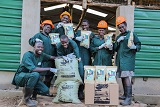
Njeru
Aquaculture feed factory
The commercial manager of the company namely De DeusIvo Van Derlee noted
that the company which is Dutch founded observed that Aquaculture is experiencing rapid growth in
Uganda therefore the need to address the feed gap.
He notes that the success of fish
farming relies on precisely formulated and properly administered feeds in the
given conditions.
Every farm has its unique setup, demanding
appropriate feeds that align with the chosen culture strategy.
De Heus comprehends these nutritional
requirements and offers species-specific aqua feed solutions tailored to different
species, culture methods and environmental condition.
The company has over 90 production
sites in over 20 countries with the latest being Uganda. Its products are
distributed in 72 countries across the globe.
The country has already been in
operation in Uganda but dealing in imported fish feed from its productions in
other countries.
It has invested over 22,000 million Euros
to construct the factory in Njeru, Jinja specifically for production of Tilapia
fish feed.
The beauty is that management has
started stocking raw materials which are sourced from organised farmer groups
across the country.
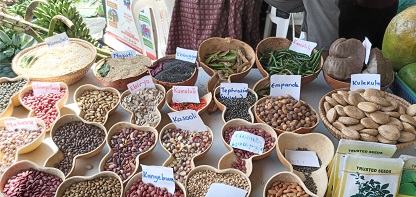
They include maize barn, soy bean
bran, sun flower cake, silver fish crushed powder mix , blood meal and minerals
from crushed animal bones among others.
Quality Control
The quality control manager Damali
Abbo explained that for farmers to access quality fish feed, her team tests for
quality of the raw materials right at the delivery entrance.
The materials must much with Uganda National
Bureau of Standards as well as prescribed International Standards.
Suppliers must ensure that the raw
materials are dried well a case in point of Maize is that the acceptable moisture
content is 12% or less and for soybean
is 10% or less.
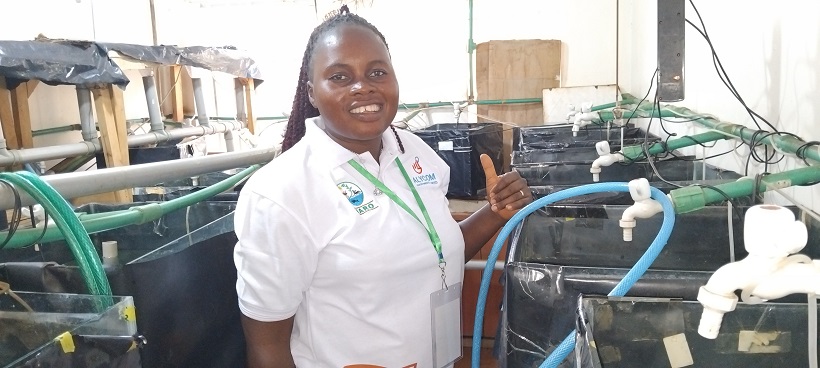
The team has a lab where they conduct
sample preparations where the test for gravity of the wetness of the material,
stones and pests
The tests are computerized and results
are shared with the team in the Netherlands.
How the test is done is that a maize
flour is put on a plate under a detecting machine which will show the results
instantly. The same is conducted once the feed is formulated to test nutritional
ingredients and the tested samples are stored for future reference.
Other tests include testing if the
pellets are floating or sinking under water if fed to the fish in the ponds.
The requirement is that fish pellets
must be floating at all times especially for Juvenile and mature Tilapia which
do not feed beneath the water but the shrimp fish species the feed must sink
because the feed under water.
For day one fish fingerlings feeds are
formulated in powder form.
Production process
The plant manager Robert Kanyembo explained
that the factory operates on locally produced energy using available biomas
such as rice husks, cow dung and wood dust.
The heat is directed to a boiler which
contains water and the steam passes through a pipe to the production line of
the feed. It is the steam which will dry the feed
Previously the company was importing Koudijs
is a well-known and trusted animal feed brand in Uganda.
Supporting livestock and aqua farmers
to reach high and consistent results through concentrates, starter feeds and
practical farming advice.
Koudijs is the main export brand of
Royal De Heus, also known as De Heus Animal and fish Nutrition.
The high quality concentrates and
premium starter feeds are imported from specialized production locations in
Europe and Asia.
The production which kicks off this
month is quantified to be 100,000 metric tons per annum. This includes half of
the amount as maize bran and soy beans.
Performance of the fish
sector
The vice president noted that she is aware that all Ugandans enjoy
consuming fish.
The country is endowed with various fish species namely among others
Tilapia, Nile Perch, Lung fish, silver fish and Alestes
baremoze fish species commonly known as Angara
fish.
This she says calls
for intentional strategy to practice aquaculture as a business because in the
past fish farmers considered fish farming as subsistence mainly to provide food
in homes.
For
the sector to thrive, there is need to consolidate efforts towards regional and
continental market integration.
She
said the East African Community has expanded with the addition of countries
like Burundi, Somalia, South Sudan and the Democratic Republic of Congo.
This
is important for building common strong ground for advocacy and full
utilization of Uganda’s natural resources.
She
contends that government has put in regulatory policies and measures on major
lakes which caused increased fish production totalling to 658,000 metric tons
per annum worthy 14.7 million US dollars with 12 fish factories processing fish
for export.
Aquaculture
fish production annually is 130,000 metric tons but with a potential of
1million metric tons per annum if farmers adopt best practices
Climate change
challenges and mitigation
Minister Adoa called upon Ugandan fish farmers to adhere to good fishing
practices to avoid challenges arising from climate change.
Due to climate change there are erratic rain seasons that wash all
contaminants into fish ponds and water bodies meaning farmers must keep
cleaning ponds and avoid contaminating water bodies to cause pollution.
She notes that the challenge of fish farmers accessing quality feed and
fish fingerlings is being addressed with the private sector coming in to set up
feed factories.
The Country director of GIZ James Macbeth Forbes noted that all countries across the globe depend on
fish as food and nutrition. Fish farming from capture fish is not enough the
reason partners must invest in promoting aquaculture fish farming to increase
its output.
He called upon
farmers in Uganda to engage in aquaculture fish farming as a business for
earning income.