The World
food day is an international yearly celebration usually on October 16th
with each country across the globe having celebrations in their individual
countries.
This year
the National Semi Arid Agricultural Resources Research Institute (NaSARRI)
located in Eastern Uganda in Serere hosted the celebrations.
It attracted
the involvement of every stakeholder dealing in issues related to agriculture
and food production in a bid to tackle the issue of food insecurity in the
country
The theme of
2024 is “The right to foods for a better life and a better future”
Background
In a communication
hand and toolkit for the celebrations published by Food and Agriculture
Organisation, it is stated that the world’s farmers produce enough food to feed
more than the global population yet, hunger persists.
World Food Day takes
place annually, on the 16th of October and promotes awareness
of hunger and action for the future of food, people and the planet.
Initiated by the Food and Agriculture
Organisation of the United Nations (FAO) in 1979,
it is one of the most celebrated days of the UN calendar.
Food is the third most basic human
need after air and water and everyone should have the right to food.
World Food Day talks about foods to
underline the need for a greater variety of nutritious, affordable, accessible,
safe and sustainable foods in order to achieve food security and healthy diets
for all.
Human rights such as the right to
food, life and liberty, work and education are recognised by the Universal
Declaration of Human Rights and two legally binding international covenants
Up to 783 million people face hunger
due to conflict, repeated weather shocks and economic downturns.
This impacts the poor and vulnerable
most severely, many of whom are agricultural households, reflecting widening
inequalities across and within countries.
Human rights such as the right to
food, life and liberty, work and education are recognised by the Universal
Declaration of Human Rights and two legally binding international covenants.
The celebrations in Uganda
In Uganda the celebrations are usually
led by FAO in collaboration with the National Agricultural Research Institute
(Naro) and this year NaSARRI is the host.
Seeds of Gold caught up with Dr Peter
Obuo a crop agronomist at NaSARRI and he explained that since the institutes
mandate is to conduct research in crops that thrive well in Semi-Arid
conditions, it is prudent to sensitize farmers in the region to embrace
technologies that can give them good yield.
This includes adoption of best
agronomic practices which include among others, adopting seed which are drought
tolerant and resistant to pests and diseases, use of animal traction technology
which is not labour intensive among others.
The scientists demonstrated crop
varieties namely groundnuts, simsim, green gram, pigeon pea, cow pea, sorghum,
millet, sunflower and cotton among others for farmer uptake in the region.
Farmers were taken through in field
demonstrations as well as seed demonstration of the crops where farmers got the
opportunity to obtain 1 kg of each crop to be planted in their farms and observe
its yield.
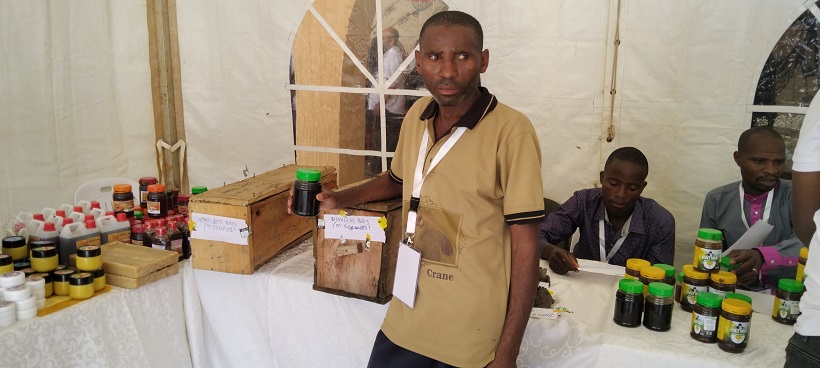
Other technologies exhibited include
how oxen is used for tilling land, showing seed and weeding as well as value addition in caking baking
using sorghum and green gram flour and pop sorghum.
Why does World Food Day talk about ‘foods’?
In the FAO communication toolkit it is
explained that Foods stands for diversity, nutrition, affordability,
accessibility and safety.
A greater diversity of nutritious foods
should be available in farmer fields, fishing nets, markets and on our tables,
for the benefit of all. Yet today, too many people suffer from hunger and are
unable to afford healthy diets.
Unhealthy diets are the leading cause
of all forms of malnutrition, undernutrition, micronutrient deficiencies and
obesity, which now exist in most countries, cutting across socio economic
classes.
More vulnerable people are often
forced to rely on staple foods or less expensive foods that can be unhealthy,
while others suffer from the unavailability of fresh or varied foods, lack the
information they need to choose a healthy diet, or simply opt for convenience.
Hunger and malnutrition are further
exacerbated by protracted or prolonged crises that are driven by a combination
of conflict, extreme weather events and economic shocks.
Agrifood systems, as a whole, are
vulnerable to disasters and crises, particularly the impacts of climate change
but at the same time, they are generating pollution, degrading soil, water and
air, and contributing to greenhouse gas emissions and biodiversity loss.
By transforming agrifood systems,
there is great potential to mitigate climate change and support peaceful,
resilient, and inclusive livelihoods for all.
FAO provides countries with technical
assistance on policy and legislation, strengthens governance and monitoring
mechanisms, develop capacities and promotes multi stakeholder policy dialogue
to transform agrifood systems for better production, better nutrition, a better
environment and a better life for all.
The organisation also provide
humanitarian and resilience building assistance to the most vulnerable,
crisis-hit people and their communities, providing time critical agricultural
support to almost 57 million people in 2023.
A food secure and nutritious world for
all requires massive investment, innovation, science, technology and wide
collaboration between a range of actors including governments, the private
sector, academic and research institutions and civil society.
Only when everyone enjoys the human
right to adequate food will we be able to achieve other human rights and the
Sustainable Development Goals.
The Universal Declaration of Human
Rights is a blueprint for a more equal and just future for all people
everywhere. And we all have a role to play.
As consumers, we can exercise rights
and call on governments to tackle inequality and poverty, make healthy food
choices to increase their availability, reduce food waste and protect the
environment.
Statistical data
It state in the toolkit that up to 783
million people are facing hunger in the world due to repeated weather shocks,
conflicts, economic downturns, inequality, and the pandemic.
Some 148 million children under the
age of five are too short for their age and 45 million are too thin for their
height.
Healthy diets are diverse, balanced in
energy intake, adequate in all nutrients and moderate in the intake of
unhealthy foods.
Some 2.5 billion adults and 37 million
children under the age of five are overweight. Some 890 million adults are
living with obesity.
Conflict and violence are primary
causes of hunger. Nearly half of all people suffering acute hunger in 2023 were
caught in conflict and nearly 135 million people in 20 countries.
Climate change disproportionately
affects the rural poor and their agricultural yields and productivity.
Yearly, 600 million people fall ill
and 420 000 die from eating contaminated food.
Worldwide, nearly 28% of women and
just over 25% of men are moderately or severely food insecure.
The world’s smallholder farmers
produce around a third of the world’s food. Globally, 13% of food is lost during
harvest and transport and 19% is wasted at the retail and consumer stage.
FAO requests
FAO contends that Governments need to
integrate the right to food across agrifood systems policies and programmes to
ensure equal access to an adequate and diverse range of nutritious, safe, and
affordable foods for all.
They must respect, protect and fulfil
the right to adequate food by building an enabling environment for people to
nourish themselves in dignity and to establish appropriate safety nets for
those who are unable to do so.
Good governance should ensure
equitable access to resources such as land, water, forests, fisheries, and
livestock
Inclusive participation in decision
making, including local communities, and women, girls and youth as well as increased
public-private partnerships with accountability mechanisms and the capacity
development necessary to transform agrifood systems and achieve sustainable
development.
The private sector
The private sector must be responsible
and accountable, adhering to international standards where possible.
Businesses should positively influence
the food environment by prioritizing a diverse range of nutritious foods,
investing in sustainable agriculture, ensuring decent working conditions,
sharing innovative food technologies especially with low-income countries and
creating truly inclusive and transparent business models and markets.
The food sector should decrease the
supply of unhealthy foods, reduce loss and waste and adhere to nutrition and
food safety-related laws and standards regarding the production and sale of
foods.
Consumer organizations
Consumer organisations need to channel
consumer needs and rights into negotiations with the food industry and
governments and engage with national initiatives for food security, nutrition
and food safety.
They need to call the private sector
to account for any failure to comply with food laws and regulations and advise
the public about their food rights, empowering them to understand their role in
securing a better future for all through healthy and just food choices and
spreading the word about rights and the inadequacies of current food systems.
Farmers
Farmers must act as agents of change
within our communities, play a critical role in collective action to ensure
healthy diets for all.
Beyond nurturing the land, farmers sow
the seeds for a future where equitable access to nutritious food is a reality
for everyone.
It’s essential to respect their right to food,
honour their right to land and preserve their knowledge, culture and
traditions.
With the right access to training,
finance and innovation they can be supported to cultivate to produce enough
safe, diverse and nutritious foods for all.