Karamoja is one of the poorest regions in Uganda with a poverty
rate estimated to be 66%, more than three times the national poverty rate.
Records from World Food Programme indicate that in recent years
all the nine districts of Karamoja namely Abim, Amudat, Kaabong, Karenga,
Kotido, Moroto, Nabilatuk, Nakapiripit and Napak are faced with food crisis.
Climate change is a major contributor and is likely to diminish
continued progress on food security through production disruptions that lead to
local availability limitations and price increase, interrupted transport
outlets, diminished food safety and others that may be catastrophic.
Insecurity caused by rising cattle rustling is causing fear with
local communities failing to carry out their farming activities leading to
increased food prices.
As a team of science journalists are on fact finding tour from
National Agricultural Semi-Arid Resources Research Institute (NaSARRI) in
Serere to Abim through to Kotido, it is evident that there is insecurity in the
area as seen by the Number of Army barracks seen along the way.
While communicating with the conduct persons on ground, they
advise the team not travel beyond 3:00 pm along the road and to farmer fields
because it the time cattle rustlers are actively attacking travelers of any caliber.
The current drought pattern in the region is affecting Karamoja
sub-region, high food prices have left many families unable to afford
nutritious foods thereby forcing them to find other ways to cope.
Some families have been forced to consume their seed stocks,
leaving nothing for the planting season.
However Scientists in NaSARRI despite the insecurity challenge
have been breeding different varieties of crops that grow well in the semi-arid
region. They have involved different farmer groups in Karamoja region in their
breeding programme and a number of the farmers are adopting them.
These crops include sorghum, finger millet, green gram,
groundnuts, narobean varieties and simsim among others.
Seeds of Gold caught up with the scientists and farmer groups
and below are the details.
Semi-Arid
Crop varieties adopted in Karamoja
The Programme leader for semi-arid cereal crops in NaSARRI Dr
Scovia Adikini explained that over time scientists at the Institute have bred
crop varieties which have been adopted by farmers in Teso, Lago and Acholi sub
region for commercialization.
However under the USAID Feed the Future projects which has been
running since 2019, her team embarked on breeding finger millet, sorghum and
green gram with a major aim of engaging farmers in Karamoja region for
adoption.
The scientists availed the farmers in Abim, Kotido, Kabong and
Napak with finger millet varieties namely Naromill2 and 5 and Seremi 2, Sorghum
variety Narosorg1, 2, Seso3 and green gram Narogram2. They are tolerant to
drought conditions and are high yielding.
Dr Adikini and team gave farmer groups in Abim, Kotido, Kabong
and Napaka improved seeds as named above in early this year and the harvests
are promising.
Sensitization
exercise
Dr Adikini and her team of scientists organised farmers in the
various districts in groups with farmer associations comprising of 30 members.
Each farmer group is encouraged to grow the crop varieties for
seed production. This is mainly for finger millet and green gram which can be
managed by community sees producers.
The team is encouraging seed companies to take up sorghum seed
production because being that it is cross pollinated plant, farmers may not
manage it well.
The groups have been sensitized to follow the right agronomy
practices, planting the seed in rows, weeding in time and timely harvesting
including good post-harvest handling practices.
Farmers in Soroti and Serere have taken it at another level by
adding value to some of the crops such as sorghum seed by popping and packaging
as snack for sale.
New
varieties in the offing
Under the same project, the scientists have been breeding three
finger millet varieties and four sorghum varieties which is due for release
next year.
They have been crossing landrace varieties newly improved
varieties to come up with varieties which are resistant to pests, diseases and
striga weed.
The Sorghum varieties ready for release include IESV 92043 DL, IS 8193, ICSR 160 and GE 17/1/2013A. However they
will be given different names once released.
GE 17/1/2013A is a Striga-tolerant variety obtained from the sorghum
improvement program at Purdue University, Indiana, USA.
Farmer adoption of the already released varieties in Abim
Ms
Akulo Rovina from Morolem Sub County in Rachkoko village Abim district is one
of the beneficiaries of the improved varieties Naro has taken to Karamoja
region.
Upon
arrival on her 2 acre Green Gram farm, one is excited to see the farm with
crops growing well, a sign of bumper harvest once the crops are harvested.
Akulo
belongs to Rwot Eneteko farmers’ Association where she is the secretary of the
group.
She
explained that their group started in 2007 as a village savings group, however
in 2018 the members began farming as a group growing simsim and ground nuts for
commercialisation.
However
in January 2023, scientists from NaSSARI were linked to the group and they were
given 5kg of improved green gram seed.
They
team in July planted the seeds on two acre land and they are about to harvest
it meaning it matures faster compared to traditional varieties they have been
growing which takes about 4 months.
The
group was also given 80 kg of Narosorg 1 sorghum variety which they planted in
July and it is ready for harvesting. They planted about 5 kg on group land and
rest were divided among members to plant on the individual farmland.
The
farmers have noticed the difference between the naro green gram and sorghum
varieties which mature faster and they intend to keep the seed for planting for
the next season.
The
local sorghum variety takes about 6 months to mature but the naro variety
matures in three months.
Once
the seed of crop varieties is multiplied, they will sell it as seed to other
farmer groups in the district.
The
group members were sensitized on best practices were they were taught to plant
seed in rows rather than the traditional method of broadcasting.
Personal
farmer initiative
Akulo
is a professional agriculturalist having completed Diploma in Arapai
Agricultural College.
She
has been practicing farming growing mainly simsim, Sorghum, sunflower and
beans. She has also been helping farmers in the district by sensitizing them on
best agronomy practices in order to obtain bumper harvest.
Having
married to Mr Ochan Alfred who is teaching in nearby Primary school, she is
practicing agriculture on about 20 acres family land.
On
average, she is able to harvest 20 bags of simssim and 30 bags of sorghum on
about 5 acres of land per season.
A
bag of simsim weighing 50kg is sold at Shs120, 000 and Sorghum is at Shs800 per
Kg.
Having
worked with Kotido NGO forum till 2017, she has been practicing intensive
farming as income earning initiative.
She
is able to take her four children to school from financial support obtained
from farming.
Having
seen the difference between the land race varieties she has been planting, she
is ready to adopt the varieties provided by Naro scientists as an individual
and as group.
Value
addition
The
farmer groups in Soroti and Serere adopted growing of the Naro sorghum, finger
millet and green gram varieties for over a period of years now.
They
have gone ahead to add value by milling sorghum flour which is mixed with green
gram flour for porridge. The same applies to mixture of millet flour with
soybean and green gram.
These
are packaged by various farmer groups and sold in the local market within
Serere and Soroti.
However
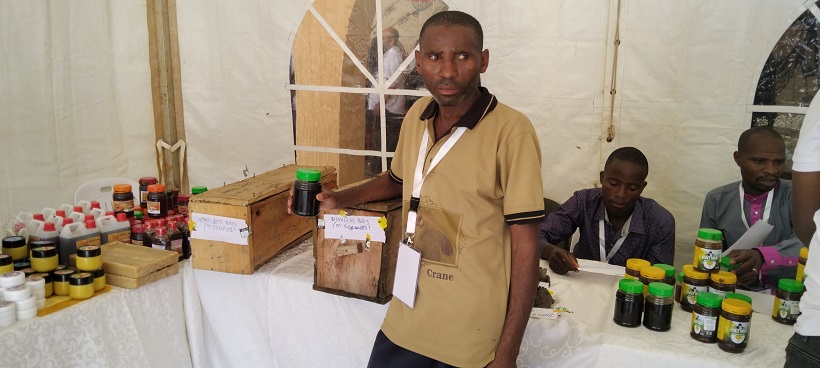
what is interesting is where a farmer group Soroti Sweet Potato Producers and
Farmers Association in Kyere Town Council in Serere district have gone ahead to
add value to Sorghum seed by popping it.
The
coordinator of the group Paul Ekuma explained that instead of popping yellow
maize, the group decided to add value to sorghum which a staple crop in Teso.
It
is now three years since the group has been doing this. They have packages of
200gms sold at Shs500 and 400gms sold at Shs1000
At
the moment they group is popping locally in saucepan but they are already
fabricating a machine for popping the same.
They
are also processing sorghum flour and millet flour composite as a mixture for
porridge
They
sell 1 Kg at Shs5,000 and a half Kg goes for half the price.