It is a known practice that fishermen go out fishing Nile Perch which is
endowed with lots of fat and sell them off to factories which are only
interested in the fillet thereby dumping the fat as waste.
However scientists specialised in fisheries science think it is not
correct because Nile Perch fat has lots of health benefits to humans.
It is their contention that consuming fish alone is an important source of omega-3
fatty acids. These essential nutrients keep our heart and brain healthy.
Fish oil contains the two fatty acids,
eicosapentaenoic acid (EPA) and docosahexaenoic acid (DHA). These are believed
to benefit the cardiovascular system.
Omega-3
fatty acids are beneficial to improving vision and eye health. This is because
the brain and eyes are heavily concentrated in omega-3 fatty acids and need
them to maintain their health and function and fish is one of the best sources
of these good fats.
As such
scientists at the Aquaculture
Research and Development Centre Kajjansi have come up with a technology of
processing Nile Perch fish fat into medicinal oil as well as in capsule form
with the bid of minimising the fat wastage as well as to tap its medicinal
benefits.
Processing
fish fat into oil
Dr Victoria Namulawa Tibenda the head of the Institute
and programme leader Aquaculture and fish Biosciences programme explaining
about the process of the technology notes that most Nile Perch being exported
by fish companies is its fillet therefore what happens with other parts such as
bones, fat, skin and scale among others.
According to her all the parts of Tilapia have
nutritional value including the bones which his team is exploring prospects of
adding value to and other parts as whole.
As of now her team is processing the fish oil which
will be processed into capsule for people to make it easy to swallow because
the oil contains the smell which may irritate people consuming it.
To her it is important for Ugandans to consume omega
acid in fish oil rather than from medicine sold in Pharmacies.
It is a requirement that everyone consumes 23kg of
fish per person per year but the scientists say Ugandans consume less than 10kg.
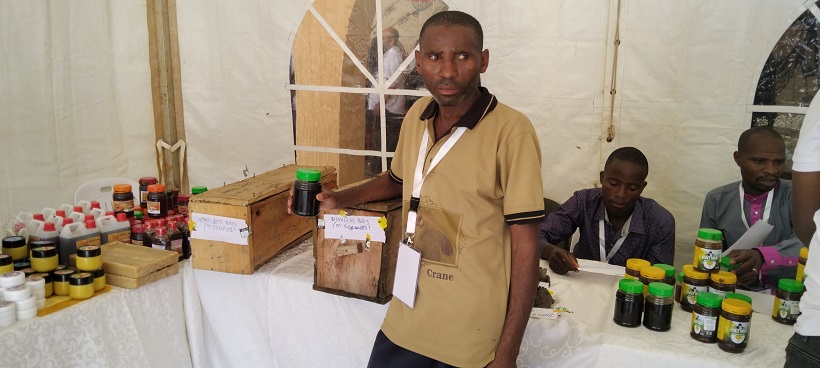
At the moment what is available is the processed oil which
has been packaged in 100ml costing Shs10, 000. The team has already the
equipment for processing the capsules and production will begin soon.
The process
Research Assistant Fred Wanda explaining how the fish
oil is processed notes that the team obtains the fish fat from Factories which
is removed under clean environment considered to be from grade A fish.
It is transported in refrigerated container and the
team checks on its temperature, contamination level, smell to ensure it has
fresh fat.
The fat material is then prepared for steam extraction
where it is heated for filtration of pure oil.
Then there is enzyme treatments, stabilisation, double
filtration including mixture of flavour ingredients added to the oil to try as
much to contain the strong smell.
Once this is through then the processing of alquots in
bottles is done and the same filtration is used for processing the capsules
When capsulating using the machine, the capsules will
end up being hot but it is later cooled in a cooling equipment ready for
packaging into bottles.
Wanda contends that his team is waiting for two
components of the fish oil capsulation equipment and the processing work will
start in June this year.
For now a number of people come to the Institute to
purchase the bottled oil mainly the elderly having bone related complications
which a number of them have attested that it works for them.
Health and
farmer benefits
Apart from having good vision, there are other
benefits such as fighting against diseases such as Arthritis, making the skin
to glow, improving born structures, provision of pure nutrition which helps
children with sickle cells and child hypertension.
Among people who abuse
alcohol, fish oil may offer protection may offer from dementia.
It has been
scientifically proven that brain cells that are exposed to a mix of fish oil
and alcohol have 95 percent less neuroinflammation and neuronal death compared
with brain cells that are only exposed to alcohol.
Oily fish
consumption may protect against early and late stage oral and skin cancer
scientists have discovered that Omega-3 fatty acid selectively inhibit the
growth of menacing and pre-malignant cells at doses that do not affect the
normal cells.
Consuming
oily fish during the last months of pregnancy can have can have positive
effects on a child’s sensory, cognitive, and motor development.
According to a review published in the https://www.ncbi.nlm.nih.gov/pubmed/15110203" target="_blank">American
Journal of Cardiology, fish consumption is associated with a
lower risk of fatal and total coronary heart disease. Fish is high in
heart-healthy omega-3 fatty acids which can http://eatthis.com/anti-inflammatory-foods" target="_blank">reduce
inflammation, help protect your heart, and stave off chronic disease
Other benefits are creating jobs for fish farmers
since Nile Perch will be on a higher demand since there is readily need for its
fat which has been wasted. Some farmers will be sensitized to process clean fat
for readily available market.